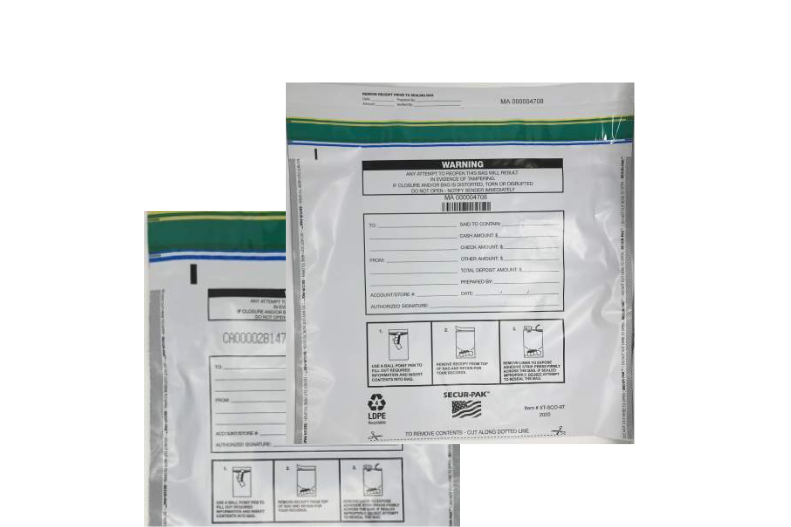
A bank deposit bag holds a business’s cash until it reaches the bank, and if it tears, leaks, or splits open in transit, that cash goes with it. Retailers, restaurants, and any business making its own deposits need bags built for daily volume, not thin, standard bags.
Heavy-duty bank deposit bags use puncture-resistant material and sealed seams that hold up through repeated handling, drops, and the trip between the register and the vault.
That construction is the difference between a bag that protects a deposit and one that fails at the worst possible moment. Businesses that switch to a heavier-gauge bag cut the risk of a lost or damaged deposit down to almost nothing.
The Real Cost of a Cash Bag That Doesn’t Hold Up on Deposit Day
A torn or leaking cash bag turns a routine deposit into a lost afternoon, with staff repacking the bag and the bank still flagging the deposit for a manual review. Coins work through a weak seam faster than bills do, so a business running thin, low-grade bank deposit bags often loses count before the bag ever reaches the teller window.
Connover’s cash deposit bags hold up to that daily handling instead of giving out on the day it matters most.
What Actually Makes a Deposit Bag Heavy Duty
“Heavy duty” is not one property. It’s the combination of the material a supplier starts with and the construction method that holds the bag together. A supplier can call any bag heavy duty without changing either one, so the label alone tells a buyer very little.
The two factors that actually decide whether a bag survives a full shift of deposits are the base material and the seam work holding it together. Skip either one and the bag looks the same on the shelf but fails differently in the field.
The Material Difference Between a Bag That Tears and One That Doesn’t
Connover builds bags in this line from multi-layer, co-extruded polyethylene film, chosen for tensile strength that holds up under stress and lets a bag absorb a hard drop or the weight of a stacked tote without the material giving out first.
That starting material is what separates a bag that survives daily handling from one that splits the first time it’s overloaded, and that consistency holds across Connover’s full line of cash deposit bags.
Heavy Duty and Tamper-Evident Solve Two Different Problems
Heavy-duty and tamper-evident do two different jobs, and a bag can have one, the other, or both. One is about whether the bag survives handling. The other is about proving whether someone opened it after the seal went on.
| | Heavy Duty | Tamper-Evident |
|---|
| Problem it solves | A bag that tears, punctures, or blows out a seam during normal handling | Proving whether someone opened the bag after the seal went on |
| How it works | Heavier-gauge material and reinforced seams absorb daily wear | A seal that leaves a permanent void mark the moment someone breaks it |
| Where it matters most | Businesses moving cash through daily handling and transport | Situations that require proof of custody, such as law enforcement or high-security cash handling |
For the full breakdown of how the seal itself works, see Everything You Need to Know About Tamper-Evident Bank Bags, or go straight to Connover’s tamper-resistant cash bags.
Where Heavy-Duty Bank Bags Earn Their Keep Every Day
A heavy-duty bank bag earns its cost back fastest in businesses that fill one every single day. Two types of operations feel that most.
- Retail stores and restaurants closing out cash drawers at the end of every shift, often multiple times a week
- Franchise locations running nightly deposits across several registers, where one bag failure can hold up the entire count
- High cash volume businesses depositing thousands of dollars a day, where a single lost bag is a much bigger problem than a slow afternoon
- Businesses that pair every deposit with a deposit slip for a documented, bank-ready drop
Get a Quote on Deposit Bags Built for Daily Cash Handling
A heavy-duty bank deposit bag is one line item that pays for itself the first time it keeps a deposit intact. Connover builds these bags for businesses that fill one every day.
Get a quote on deposit bags built for daily cash handling and match the bag to your actual volume, not a generic size. Businesses running volumes closer to a bank or armored car schedule should start with banks and armored car bags instead.
Bank Deposit Bag FAQs
How often should a business replace its deposit bags?
Replace a bag at the first sign of wear, a frayed seam, a soft spot, or a seal that already shows use. Most businesses swap bags out well before the material itself fails.
Are heavy-duty deposit bags reusable or single-use?
A heavy-duty bag without a tamper seal holds up to repeat use as long as the material and seams stay intact. A tamper-evident bag works once, since breaking the seal is what proves nobody touched the bag in between.
What size bank deposit bag does a small business need?
Bag size depends on the daily cash and check volume passing through, not the size of the business itself. Most retail and restaurant locations do fine with a mid-size bag built to hold a single shift’s deposit.
Do banks require a specific type of deposit bag?
Some banks and armored car services set their own bag requirements, so it’s worth checking before ordering in bulk. Most accept any secure, sealed bag that keeps the deposit intact in transit.