

We design, manufacture, and distribute a wide array of Tamper-Evident Cash Deposit, Evidence, Casino, and other bags for financial institutions, retailers, churches, restaurants, law enforcement, payroll firms and more.
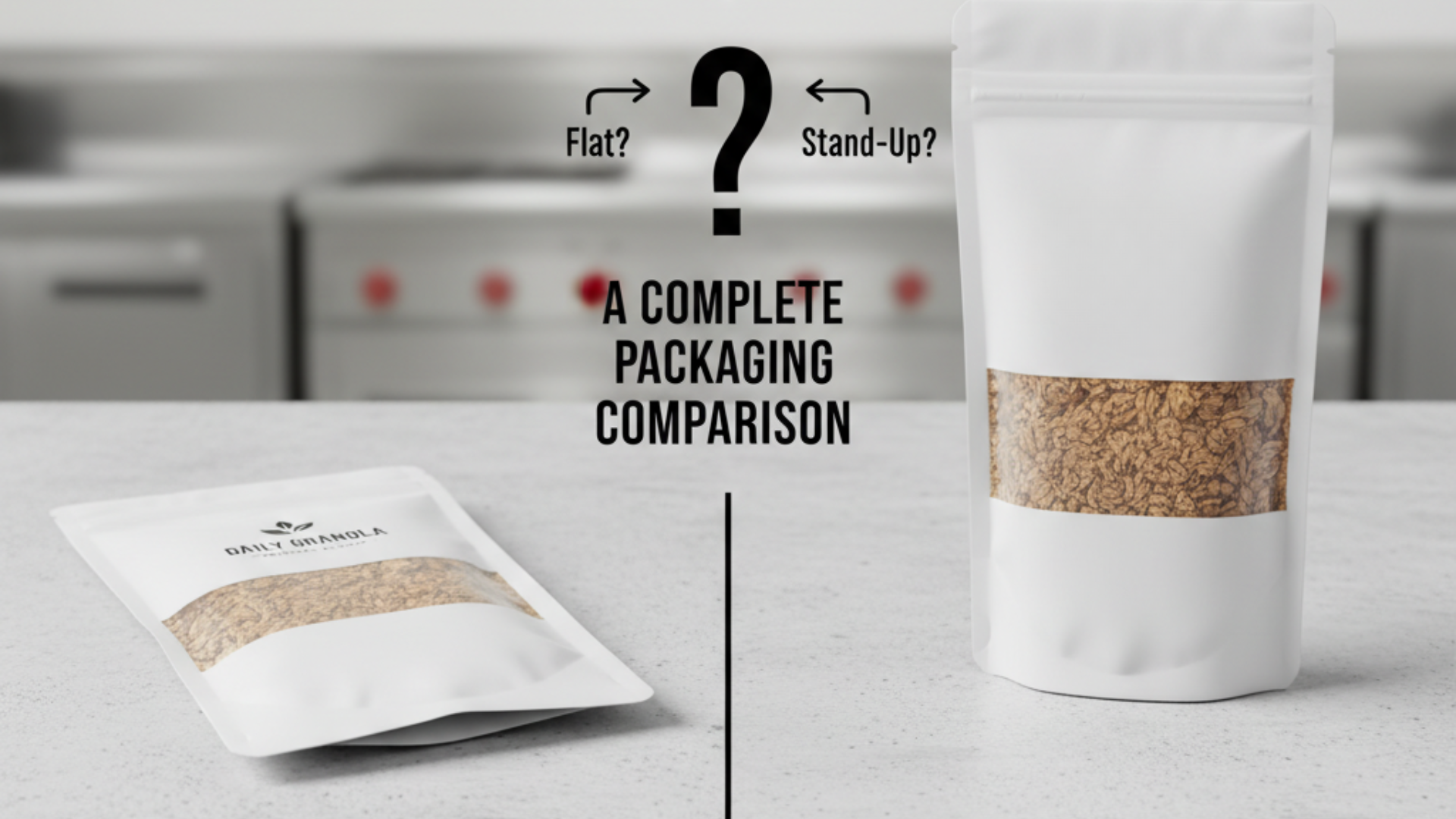
In today’s competitive marketplace, choosing the right packaging can make all the difference for your product’s success. Whether you’re launching a new product or refreshing your packaging, the decision between a flat pouch vs stand-up pouch deserves careful consideration. Both options are popular flexible packaging types, but they serve different purposes and offer unique advantages.
In this pouch packaging comparison, we explore the features, benefits, and best uses of flat and stand-up pouches to help you determine the best pouch for your brand.
Flexible packaging continues to rise in popularity due to its versatility, retail appeal, and cost-effective nature. From food packaging pouches to specialty items and promotional products, these packaging formats keep goods fresh, protected, and visually engaging. Two of the most common formats are flat pouches and stand-up pouches.
Flat pouches, sometimes called pillow pouches, are simple, lightweight packaging solutions. Their design consists of a sealed back and two side seams, forming a flat package with no gusset at the bottom. Flat pouches are widely used for:
Single-serve snack packaging
Small parts and accessories
Powdered products
Samples or trial packs
Flat pouches are ideal when:
You want to minimize material use and packaging weight
You need cost-effective protection for lightweight goods
Your products don’t require shelf standing capability
Despite their simplicity, flat pouches can still be customized with high-quality printing, resealable zippers, and barrier films for enhanced freshness.
Stand-up pouches, also known as Doyen bags or bottom-gusset pouches, include a shaped base that allows them to stand upright on store shelves. This structural advantage makes them one of the most effective retail pouch packaging options available.
Stand-up pouches are popular because they offer:
Better shelf presence: Upright display helps products stand out.
Larger printable area: More space for branding and product information.
Resealable features: Zippers and spouts for convenience.
Enhanced protection: Barrier materials keep products fresh longer.
Whether you need custom stand-up pouches for pet food, coffee, or dry goods, this style boosts brand visibility and consumer engagement.
Here’s a side-by-side look at how these two packaging formats stack up:
| Feature | Flat Pouch | Stand-Up Pouch |
|---|---|---|
| Shelf Presence | Low | High |
| Storage Efficiency | High | Moderate |
| Printing Area | Moderate | Large |
| Reseal Options | Optional | Common |
| Ideal For | Small, lightweight products | Retail products, food, beverages |
| Cost | Lower | Higher (due to gusset design) |
| Brand Visibility | Limited | Excellent |
From this pouch packaging comparison, it’s clear that stand-up pouches excel in retail display and branding, while flat pouches are a cost-effective solution for lightweight or low-volume products.
For many growing brands, the stand-up pouch vs flat pouch decision comes down to visibility and consumer experience. Stand-up pouches offer:
Products packaged in stand-up pouches are more likely to capture a shopper’s attention. Their upright design feels premium and fits seamlessly into retail shelves, which is especially critical in crowded aisles.
Stand-up pouches provide larger printable surfaces for logos, product images, and messaging. Best pouch for brand considerations often prioritize this enhanced visual real estate for maximum impact.
With resealable zippers and ergonomic designs, stand-up pouches are easier for consumers to open, close, and store. This convenience can increase brand loyalty and repeat purchases.
Flat pouches remain an excellent choice in specific situations:
Budget-minded packaging projects: Flat pouches often cost less due to simpler construction.
Lightweight or sample products: When product weight and space are minimal, flat pouches are efficient and effective.
Minimal branding needs: For products where packaging is functional rather than promotional, flat pouches get the job done without extra packaging bulk.
Selecting between a flat pouch vs stand-up pouch doesn’t have to be difficult if you consider the following:
Product type and weight – Does your product need support and upright display?
Retail goals – Are you selling on shelves, online, or both?
Budget constraints – How much can you invest in custom printing and materials?
Consumer experience – Is resealability or convenience a priority?
Brand visibility – How important is impactful shelf presence?
Working with packaging experts ensures you choose the most appropriate flexible packaging types for your needs.
Both flat pouches and stand-up pouches have their place in today’s packaging landscape. While flat pouches are cost-effective and efficient for lightweight products, stand-up pouches win in retail visibility, branding opportunities, and consumer convenience.
Whether you’re focused on retail pouch packaging, food packaging pouches, or custom stand-up pouches, understanding the differences between these formats helps you make smarter choices. Explore your options with Connover Packaging and find the solution that best fits your product and brand goals.
1. What’s the difference between a flat pouch and a stand-up pouch?
Flat pouches are simple, pillow-shaped bags best for lightweight products. Stand-up pouches include a bottom gusset that allows the pouch to stand on shelves, offering more visibility and print space.
2. Which packaging is better for retail products?
Stand-up pouches are generally better for retail products because of their upright display and larger branding area.
3. Can flat pouches be resealable?
Yes — flat pouches can include zippers or tear notches for resealability, though this is more common with stand-up pouches.
4. Are stand-up pouches suitable for food products?
Absolutely. Many food packaging pouches use stand-up designs with barrier films to keep food fresh and protected.
5. How do I choose the best pouch for my brand?
Consider product type, retail goals, budget, and packaging functionality. Engaging packaging experts can help you evaluate which format best aligns with your business needs.




Proper evidence handling is the backbone of any successful investigation. From crime scenes to courtrooms, the integrity of physical evidence determines whether facts hold up

In modern healthcare environments, safe and reliable packaging plays a critical role in infection control, organization, and operational efficiency. From hospitals and clinics to laboratories
Packaging plays a critical role in retail operations, customer experience, and brand perception. One of the most important decisions retailers face today is choosing between